


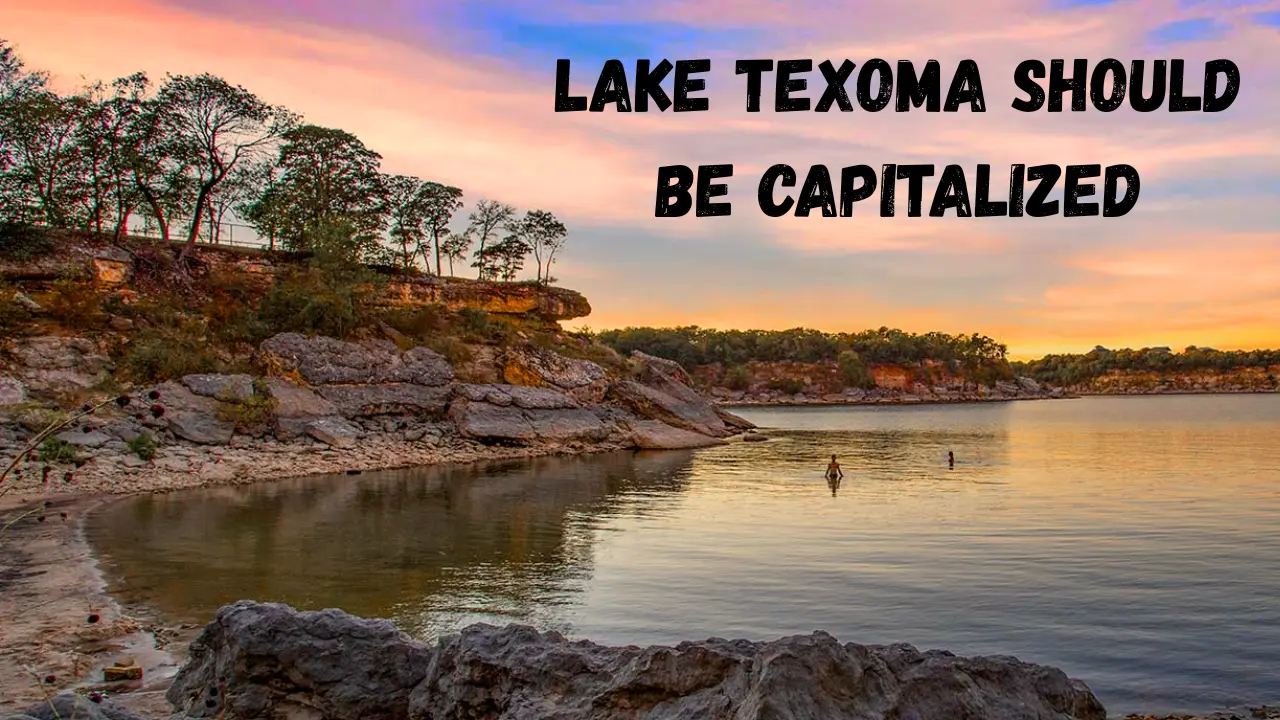
Language, grammar, and geographical knowledge often intersect in ways that shape the accuracy and professionalism of what we write. One of the most common examples appears in discussions about well-known natural landmarks. Among them, Lake Texoma stands out not only for its historical and cultural significance but also for the frequent confusion over how its name should be written. Understanding why (Lake Texoma Should Be Capitalized) is more than a grammar lesson—it is a matter of respecting the identity, history, and official designation of one of the largest reservoirs in the United States.
This detailed guide explores the reasons behind the correct capitalization of Lake Texoma, the linguistic rules that govern names of natural formations, the historical and geographical importance of the lake, common writing mistakes, and why proper capitalization directly affects clarity, professionalism, and credibility in writing.
Throughout this article, the keyword Lake Texoma Should Be Capitalized will appear in natural, meaningful contexts that support the theme and enhance the searchability of the article.
Understanding What Makes a Proper Noun
Before diving into the specifics of Lake Texoma, it is essential to understand what defines a proper noun. A proper noun refers to a specific person, place, organization, or titled concept. Unlike common nouns, proper nouns are capitalized because they identify unique names rather than general categories.
Examples include:
- Mount Everest
- Pacific Ocean
- Grand Canyon
- Lake Michigan
In each case, both components of a geographical name are capitalized because the words form an official title. The same rule applies to Lake Texoma, a distinct and legally recognized geographical entity. Therefore, both Lake and Texoma must always appear with capital letters when used together to identify the location. This is one of the core reasons why Lake Texoma Should Be Capitalized.
The Historical Importance of Lake Texoma
Understanding the depth of Lake Texoma’s significance reinforces why proper capitalization matters. Lake Texoma was formed after the construction of Denison Dam in the 1940s. Built primarily for flood control, hydroelectric power generation, and water supply, the lake quickly became one of the most important man-made reservoirs in the region.
Construction and Development
The dam project involved thousands of workers and required significant engineering expertise. Once the dam was completed, the resulting reservoir dramatically reshaped the landscape. Entire communities, transportation routes, and natural spaces were altered or relocated. Cemeteries, railroad lines, and farmlands had to be moved. The formation of Lake Texoma marked a monumental shift in regional geography.
Growth Over the Decades
From its early years, Lake Texoma brought opportunities for recreation, fishing, boating, and tourism. Local economies benefited from increased travel and business growth around marinas, cabins, hotels, and recreational services.
Thousands of visitors now explore the lake daily during peak seasons, making it a major economic driver for Texas and Oklahoma.
Given its historical and economic weight, correctly naming such a landmark through accurate capitalization becomes even more important. That is another reason Lake Texoma Should Be Capitalized.
Geographical Significance and Why the Name Matters
Lake Texoma is one of the largest reservoirs in the United States, covering tens of thousands of acres. It lies on the border between Texas and Oklahoma, derived from a blend of the two state names—“Tex” and “Oma.”
Its name is not a generic label but a formal, assigned title that distinguishes it from other lakes. This reinforces that the name Lake Texoma is a proper noun, and thus, it requires capitalization in all contexts where the full name appears.
The lake spans multiple counties:
- Texas: Grayson County, Cooke County
- Oklahoma: Bryan County, Marshall County, Love County
In addition, it feeds into the Red River system and holds a massive watershed. Because it is an officially recognized geographical identity, the name must adhere to proper capitalization rules. Each time a writer refers to this lake by its full name, the correct form demonstrates respect for its designation, another reason that Lake Texoma Should Be Capitalized.
Grammar Rules Behind Capitalizing Geographic Names
The capitalization of geographic formations is one of the most consistent rules in English grammar. Whenever the word describing the geographic feature is used as part of the official name, it must be capitalized.
Examples:
- Lake Superior
- Lake Tahoe
- Lake Texoma
- River Thames
- Mount Kilimanjaro
- Gulf of Mexico
In contrast, when the geographical feature appears in a general sense or is not part of an official title, capitalization is not required:
- “The lake was peaceful this morning.”
- “We followed the river downstream.”
- “They climbed the mountain at sunset.”
In these cases, the words do not refer to specific names but instead describe general types of landforms.
Therefore, when discussing the official name Lake Texoma, capitalizing both words is mandatory. This foundational rule is one of the clearest grammatical explanations of why Lake Texoma Should Be Capitalized.
Common Writing Mistakes Involving Lake Texoma
Despite the rules, writers frequently make mistakes when referring to Lake Texoma. These errors often occur in casual writing, promotional materials, travel blogs, and social media posts. Understanding these mistakes helps writers avoid them and maintain professional-quality content.
Lowercasing “lake” in the full name
Incorrect: lake Texoma
Correct: Lake Texoma
The mistake usually happens when writers treat “lake” as a general category rather than part of the official name.
Using lowercase for both words
Incorrect: lake texoma
Correct: Lake Texoma
This often appears in informal online comments, hashtags, and quick posts. Although casual platforms encourage relaxed writing standards, geographical names still require proper capitalization for clarity and accuracy.
Using uppercase in generic situations
Incorrect: “We visited the Lake yesterday.”
Correct: “We visited the lake yesterday.”
Capitalization should only occur when referring to Lake Texoma by its full proper name.
Inconsistency within the same article
Some writers alternate between “Lake Texoma” and “lake Texoma” within the same paragraph. This inconsistency weakens credibility and creates confusion. Uniformity in capitalization is essential.
Each of these mistakes underscores why consistent use of the proper noun is necessary and why Lake Texoma Should Be Capitalized at all times when using its official name.
Why Proper Capitalization Matters for Content Creators and Professionals
Beyond grammar rules, the correct use of capitalization directly influences how readers perceive your writing. Whether you run a travel blog, operate a business near Lake Texoma, or write academic or informational content, accurate capitalization carries several important benefits.
Professionalism
Readers instinctively associate correct grammar with credibility. If place names are written incorrectly, the content may appear rushed or unpolished.
Clarity and Understanding
Proper nouns distinguish specific locations from general nouns. Without capitalization, readers may misinterpret sentences or fail to realize that you are referring to a specific, named location.
SEO Improvements
Search engines analyze text based on accuracy, consistency, and user expectations. Using the correct form “Lake Texoma” improves indexing, ranking, and search alignment with user queries. Since many readers search for the correct term, proper capitalization supports stronger SEO performance.
Respect for Cultural and Historical Identity
Names of geographical places carry historical weight. Writing them correctly respects the identity, heritage, and significance of the region.
All of these reasons combine to reinforce why Lake Texoma Should Be Capitalized in all formal writing.
The Cultural and Recreational Importance of Lake Texoma
Lake Texoma is not only a physical landmark; it is also a cultural and recreational centerpiece for both Texas and Oklahoma.
Fishing and Wildlife
The lake is famous for its striped bass population and attracts anglers from across the United States. The surrounding environment includes rich plant and animal life, making it a popular area for wildlife enthusiasts.
Tourism and Recreation
Tens of thousands of tourists visit annually for:
- Boating
- Camping
- Hiking
- Water sports
- Outdoor events
This makes the lake a major contributor to local economies, generating income for marinas, restaurants, resorts, and local businesses.
Community and Identity
Communities around the lake host festivals, fishing tournaments, and seasonal events that reflect the lake’s deep connection to local identity. The name Lake Texoma appears in branding, signage, marketing campaigns, and civic literature, reinforcing its status as an official proper noun.
Once again, these cultural roots are a powerful reminder that Lake Texoma Should Be Capitalized whenever referenced in writing.
How Writers Can Ensure Correct Use of Lake Texoma in Content
To maintain accuracy in writing, creators should follow practical guidelines:
- Always use capital letters for the official name “Lake Texoma.”
- Use lowercase only when referring to “the lake” in a general sense.
- Stay consistent throughout an article or document.
- Double-check spelling and formatting in titles, headers, and paragraphs.
- Avoid over-capitalizing generic words when the name is not used.
Following these practices keeps content clean, correct, and credible.
Conclusion
Understanding why Lake Texoma Should Be Capitalized involves a blend of grammar rules, historical significance, geographical identity, and writing professionalism. Lake Texoma is not just another body of water; it is a landmark shaped by history, culture, engineering, and regional identity. Capitalizing its name correctly reflects respect for that identity and ensures that writing remains accurate and credible.
By applying proper capitalization and understanding the reasons behind it, writers, students, educators, and content creators can elevate the clarity and authenticity of their work while honoring one of the most remarkable natural sites in the central United States.
FAQs
1. Why must Lake Texoma be capitalized?
Because it is a proper noun referring to a specific geographical location, both words must be capitalized as part of the official name.
2. Can I lowercase the word “lake” when referring to Lake Texoma?
Yes, but only when using “the lake” in a general sense. When mentioning the full name, both words must be capitalized.
3. Does capitalization affect SEO when writing about Lake Texoma?
Yes. Using the correct capitalization improves search accuracy and helps your content align with how users commonly search for the term.
4. Why do people often write “lake Texoma” incorrectly?
Many writers mistakenly treat “lake” as a generic term rather than part of the official name. This leads to inconsistent capitalization.
5. Is capitalization required in both formal and informal writing?
Yes. Even in informal settings, proper nouns should be capitalized to maintain clarity and accuracy.
Read More: When to Reach Out A Complete Guide to avstarnews contact working hours
